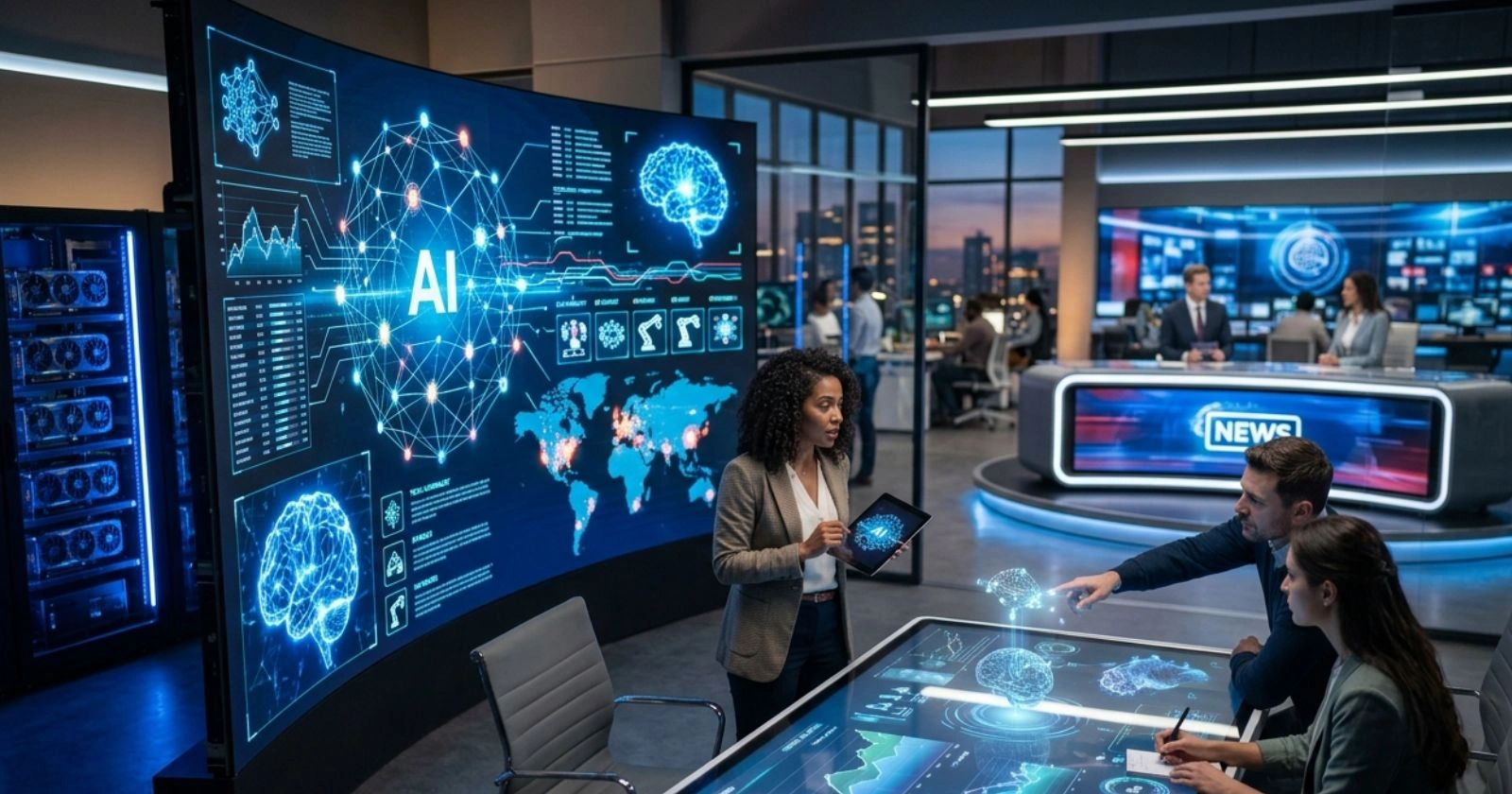
Creativity has long been considered a uniquely human trait, a spark of imagination that sets artists, writers, and musicians apart. Yet, in today’s fast-evolving digital landscape, artificial intelligence (AI) is challenging that notion, weaving itself into the creative process in ways once thought impossible.
From generating intricate paintings to composing symphonies, AI is not just a tool but a collaborator, reshaping how society perceives and produces creative work. This fusion of technology and artistry marks a pivotal moment, where algorithms amplify human potential while sparking debates about authenticity and originality.
The rise of AI-driven creativity is not confined to tech labs or niche industries. It permeates mainstream culture, influencing everything from Hollywood blockbusters to social media content. Tools like DALL·E, Midjourney, and ChatGPT have democratized creativity, enabling anyone with a keyboard to produce professional-grade art, music, or literature. This accessibility is both empowering and disruptive, raising questions about the role of human creators in an era dominated by intelligent machines. As AI continues to evolve, its impact on creative industries is profound, blending innovation with tradition in unexpected ways.
At the heart of this transformation lies a delicate balance. AI offers unprecedented efficiency and scale, but it also challenges the essence of creativity itself. Can a machine truly create, or is it merely mimicking patterns learned from human work?
This question drives discussions among artists, technologists, and ethicists alike. By exploring AI’s role in art, music, writing, and beyond, this journey into the algorithmic era reveals how technology is not replacing creativity but redefining it for a new generation.
AI as a Creative Partner
Artificial intelligence is no longer a distant concept confined to science fiction; it is a tangible force in creative industries. AI tools analyze vast datasets, recognize patterns, and generate outputs that rival human-crafted work.
Platforms like Midjourney and Stable Diffusion produce visually stunning images from simple text prompts, while AI-driven music platforms like Amper Music compose tracks tailored to specific moods or genres. These tools act as creative partners, augmenting human ideas with computational precision.
The power of AI lies in its ability to process and synthesize information at scale. For instance, an artist can input a vague concept like “futuristic city at dusk” into an AI tool, and within seconds, receive a detailed, photorealistic rendering. This speed and versatility make AI invaluable for professionals and hobbyists alike. According to a 2024 report by Adobe, 78% of creative professionals now use AI tools to streamline workflows, saving time while enhancing output quality.
Yet, this partnership is not without challenges. AI-generated content often lacks the emotional depth or intentionality of human work. While algorithms excel at replicating styles or patterns, they struggle with the nuanced storytelling that defines great art. This limitation highlights the importance of human oversight, where creators guide AI to refine outputs, ensuring they align with artistic vision.
Transforming Visual Arts
The visual arts have undergone a seismic shift with AI’s arrival. Tools like DALL·E 3 and Midjourney have turned text prompts into intricate paintings, photographs, and digital designs, rivaling the work of seasoned artists. These platforms leverage generative adversarial networks (GANs), where two neural networks compete to create and refine images, producing results that are often indistinguishable from human creations.
This transformation has democratized art creation. Amateurs with no formal training can now produce gallery-worthy pieces, leveling the playing field. A 2025 study by Art Basel found that 65% of digital artists incorporate AI tools into their workflows, with 40% of galleries showcasing AI-generated art. This trend is evident on platforms like Instagram, where AI-created visuals dominate feeds, blending seamlessly with human-made content.
However, the rise of AI art has sparked debates about originality. Since AI models are trained on vast datasets of existing artwork, questions arise about whether their outputs are truly novel or merely derivative. Legal battles over copyright infringement have emerged, with artists claiming AI tools replicate their styles without permission. Despite these concerns, the art world continues to embrace AI, with museums like the Museum of Modern Art hosting exhibitions dedicated to algorithmic creativity.
Revolutionizing Music Composition
Music, like visual art, has been profoundly impacted by AI. Platforms such as AIVA and Soundraw use machine learning to compose music in various genres, from classical to pop. These tools analyze thousands of songs to identify patterns in melody, rhythm, and harmony, generating compositions that resonate with listeners.
For example, AIVA’s AI-composed tracks have been used in film scores, showcasing its ability to evoke emotion.
AI’s role in music extends beyond composition. Tools like LANDR automate mastering and mixing, tasks that once required expensive studio time. A 2024 survey by Spotify revealed that 30% of independent musicians use AI tools to produce or refine their work, citing cost savings and accessibility as key benefits. This shift has empowered emerging artists, enabling them to compete with established names.
Yet, purists argue that AI-composed music lacks soul. While algorithms can mimic Beethoven or Beyoncé, they may not capture the raw emotion of a human performance. To address this, some musicians use AI as a starting point, layering their vocals or instruments over algorithmic compositions to create a hybrid sound. This collaborative approach highlights AI’s potential as a tool for innovation rather than a replacement for human talent.
AI in Writing and Storytelling
The written word has not escaped AI’s influence. Tools like ChatGPT and Jasper AI generate everything from blog posts to novels, offering writers a way to brainstorm ideas, draft content, or overcome writer’s block. These platforms use natural language processing (NLP) to produce coherent, contextually relevant text, often indistinguishable from human writing.
For content creators, AI offers efficiency and scale. A 2025 report by HubSpot found that 62% of marketers use AI to generate social media posts, emails, or articles, reducing production time by up to 40%. This is particularly valuable in fast-paced industries like journalism, where AI can summarize news or generate reports in seconds.
However, AI’s role in writing raises ethical questions. Automated content can sometimes lack depth or authenticity, and overreliance risks diluting a writer’s unique voice. Additionally, concerns about plagiarism have surfaced, as AI models draw from vast text corpora. To mitigate this, writers are encouraged to use AI as a collaborative tool, refining outputs to maintain originality and personal flair.
Ethical and Cultural Implications
The integration of AI into creative fields is not without controversy. One major concern is the potential for job displacement. As AI tools become more sophisticated, some fear they could replace entry-level roles in design, writing, or music production. A 2024 study by McKinsey estimated that 10% of creative jobs could be automated by 2030, though new roles in AI oversight and curation are expected to emerge.
Cultural implications also loom large. AI models are trained on datasets that reflect human biases, which can perpetuate stereotypes or marginalize certain voices. For example, early AI art tools struggled to represent diverse skin tones or cultural symbols accurately. Developers are addressing these issues by refining training data, but the challenge remains.
On the flip side, AI can amplify underrepresented voices. By lowering barriers to entry, it enables creators from diverse backgrounds to produce and share their work. Platforms like X have become hubs for AI-generated content, showcasing creations from artists worldwide. This democratization fosters a more inclusive creative landscape, challenging traditional gatekeepers like publishers or galleries.
Key Facts and Findings
| Aspect | Details |
|---|---|
| Market Growth | AI creative tools market projected to reach $10 billion by 2030. |
| Adoption Rate | 78% of creative professionals use AI tools (Adobe, 2024). |
| Art Impact | 40% of art galleries showcase AI-generated art (Art Basel, 2025). |
| Music Usage | 30% of independent musicians use AI for production (Spotify, 2024). |
| Writing Efficiency | AI reduces content production time by up to 40% (HubSpot, 2025). |
| Job Automation | 10% of creative jobs may be automated by 2030 (McKinsey, 2024). |
The Future of AI-Driven Creativity
Looking ahead, AI’s role in creativity is poised to expand. Advances in generative AI promise even more sophisticated tools, capable of producing multi-sensory experiences like interactive films or immersive virtual reality art. Companies like OpenAI and Google are investing heavily in creative AI, with projections estimating the market for AI-driven creative tools to reach $10 billion by 2030.
Collaboration between humans and AI will likely define the future. Rather than replacing creators, AI will serve as a catalyst, pushing boundaries and sparking new ideas. For instance, AI could analyze audience preferences in real time, allowing creators to tailor content dynamically. This synergy could redefine industries, from gaming to advertising.
Yet, the future hinges on ethical development. Ensuring AI tools are transparent, unbiased, and accessible will be critical to maintaining trust. As society navigates this new era, the focus must remain on harnessing AI to enhance, not overshadow, human creativity.
Conclusion
The intersection of AI and creativity marks a turning point in human history, where algorithms and imagination converge to redefine artistic expression. From visual arts to music and writing, AI is not just a tool but a transformative force, enabling creators to push boundaries and explore uncharted territories.
Its ability to democratize access, streamline workflows, and inspire innovation has reshaped industries, making creativity more inclusive than ever before. Yet, this revolution comes with challenges, from ethical concerns to questions about authenticity, which demand careful navigation.
As AI continues to evolve, its role as a creative partner will only grow stronger. The key lies in striking a balance, leveraging technology to amplify human ingenuity while preserving the emotional depth that defines great art.
By embracing this synergy, creators can harness AI to tell stories, compose music, and craft visuals that resonate with audiences worldwide. The algorithmic era is not about machines overtaking creativity but about humans and AI collaborating to shape a bold, vibrant future. This journey is just beginning, and its possibilities are as limitless as the human imagination itself.
FAQs
AI-driven creativity refers to the use of artificial intelligence tools to generate or enhance artistic outputs, such as art, music, or writing, by analyzing patterns and producing content based on human inputs.
AI generates art using models like generative adversarial networks (GANs), which analyze vast datasets of images to create visuals from text prompts, often producing photorealistic or stylized results.
While AI can automate certain tasks, it is unlikely to replace human artists entirely. It serves as a tool to enhance creativity, with human oversight needed for emotional depth and originality.
Popular tools include DALL·E 3 and Midjourney for art, AIVA and Soundraw for music, and ChatGPT and Jasper AI for writing, each offering unique features for creators.
AI streamlines music composition, mastering, and mixing, enabling artists to produce high-quality tracks efficiently. It also empowers independent musicians by reducing production costs.
Yes, concerns include job displacement, copyright infringement, and biases in AI training data, which can perpetuate stereotypes or marginalize certain voices.
AI struggles with true originality, as it relies on existing datasets. Human creators must refine AI outputs to ensure uniqueness and alignment with their vision.
Industries like advertising, gaming, film, music, and content creation benefit significantly, using AI to streamline workflows and generate innovative outputs.
Creators can mitigate biases by using diverse datasets, collaborating with AI ethically, and reviewing outputs to ensure cultural sensitivity and accuracy.
The future involves advanced AI tools creating multi-sensory experiences, with a focus on human-AI collaboration, ethical development, and dynamic content tailored to audiences.