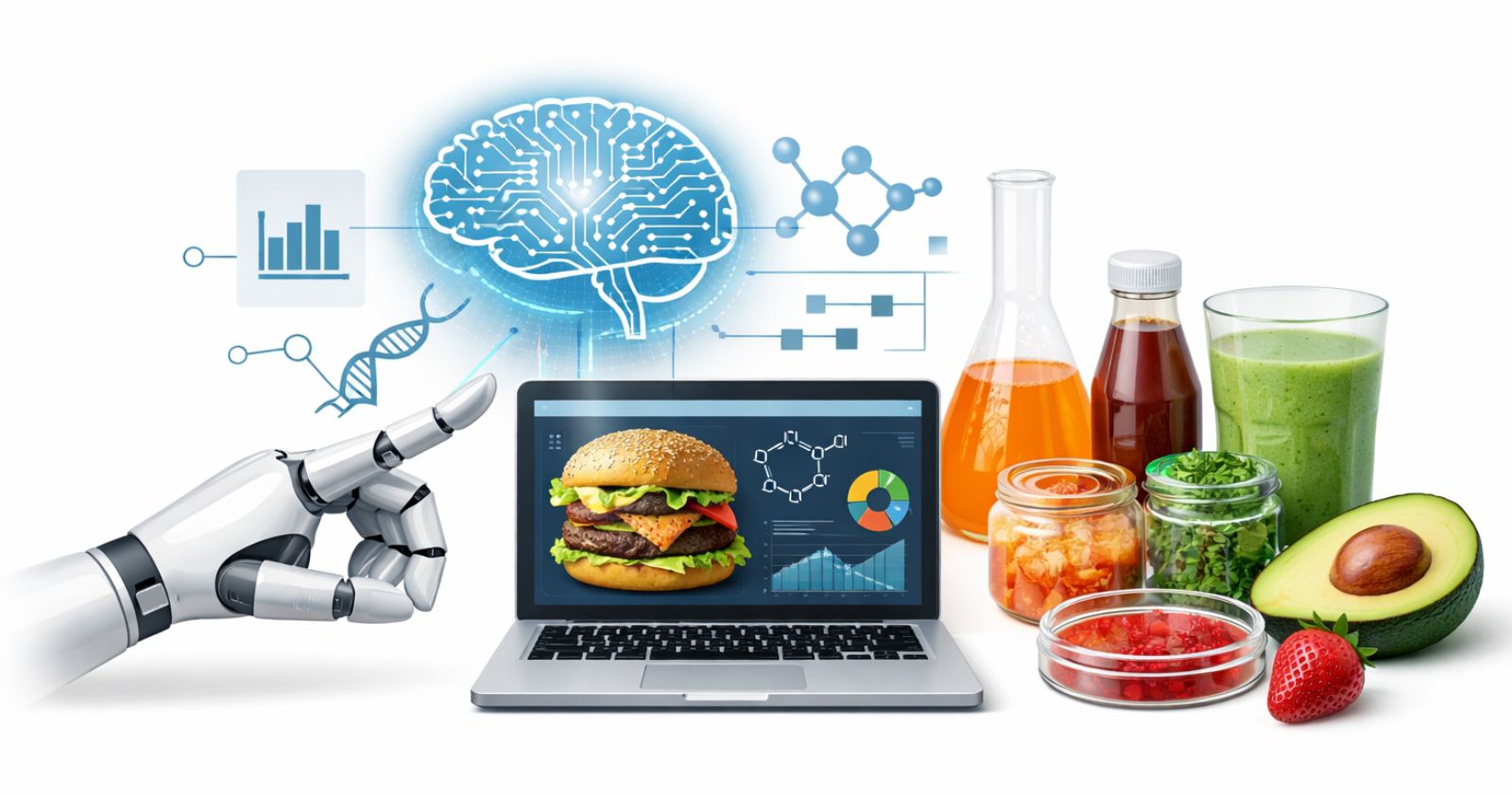
Walk into any major food and beverage research kitchen today, and something feels different. Scientists still wear white coats, still taste prototypes, and still argue over texture notes, but a new partner sits quietly in the background: artificial intelligence. This technology no longer belongs only to Silicon Valley giants. It lives inside the daily workflow of companies ranging from global players like Cargill and Ingredion to nimble startup brands racing to launch the next viral snack.
The numbers tell a compelling story. New food and beverage products historically fail at an astonishing 80% rate. Development cycles often stretch twelve to twenty-four months and cost millions. Yet early adopters of AI report cutting bench time by 30% within the first six to nine months, spotting winning flavors before a single prototype hits the bench, and bringing successful products to shelf months ahead of competitors.
This shift matters because consumer tastes change faster than ever. One day, the world craves spicy chamoy candy; the next, it demands high-protein, zero-sugar indulgence. Companies that move slowly get left behind. Those that harness AI move at a speed never seen before in an industry built on slow, sensory science.
Why Food R&D Suddenly Became AI’s Perfect Playground
Massive Data Meets Human Senses
Food development generates oceans of data: sensory scores, chemical profiles, consumer reviews, social media sentiment, supply chain costs, and regulatory rules. Humans excel at the creative leap but struggle to connect thousands of variables at once. AI thrives on exactly that challenge.
The 80% Failure Rate Problem
Only one in five new food products survives its first year. Most die because formulators guess wrong on taste, texture, price, or trend timing. AI attacks this problem directly by modeling how hundreds of ingredients interact and predicting consumer response long before expensive pilot runs.
Speed Equals Survival
McKinsey estimates that AI-driven acceleration in global R&D could unlock between $360 billion and $560 billion in annual economic value. In food and beverage, even a fraction of that number changes everything.
Real-World Impact Already Happening
| Company / Organization | AI Application | Reported Outcome |
|---|---|---|
| Cargill | Recipe discovery & fermentation optimization | Faster novel recipes matching consumer trends |
| Ingredion | Proprietary data + AI modeling | Higher success probability in protein fortification |
| Corbion | Social listening + formulation guidance | Real-time trend detection and faster response |
| FoodChain ID | Real-time compliance & formulation checks | Reduced costly rework and faster market entry |
| Industry average (early adopters) | Enterprise AI platforms | ~30% reduction in bench time from concept to scale-up |
Flavor and Texture Prediction: From Guesswork to Science
Flavor chemists once relied on experience and small consumer panels. Today, machine learning models trained on millions of flavor compounds and billions of consumer data points can suggest combinations humans might never imagine.
Imagine typing “create a plant-based cheese that melts like dairy, costs under target, appeals to Gen Z, and uses only upcycled ingredients.” Within seconds, the system returns ranked formulations with predicted liking scores, cost estimates, and even patent risk flags. Scientists then pick the top three, run bench trials, and almost always find a winner on the first or second try.
Texture prediction has proven equally powerful. AI now models how proteins, starches, and hydrocolloids behave under heat, shear, and freeze-thaw cycles. This capability dramatically speeds development of everything from creamy oat milk to shelf-stable bakery items.
Consumer Intelligence at Lightning Speed
Social media never sleeps, and neither does AI-powered listening. Tools scan TikTok, Reddit, Instagram, and reviews in real time to detect micro-trends before they hit mainstream reports.
Recent examples include:
- The sudden rise of “swicy” (sweet + spicy) profiles in 2024
- Unexpected demand for butter flavors in non-dairy products
- Growing calls for seaweed-based umami in snacks
Brands that caught these signals early launched winning products while others played catch-up six months later.
Reformulation Becomes Strategic, Not Reactive
Regulatory changes and consumer demands force constant reformulation: reduce sugar, remove titanium dioxide, switch to RSPO-certified palm, boost protein. These projects traditionally consume huge chunks of R&D bandwidth.
Enterprise AI changes the equation. Feed the system current formulas, new constraints, and target sensory profiles; it returns optimized options ranked by cost, performance, and consumer predicted acceptance. What used to take weeks now takes hours, freeing scientists for true breakthrough work.
Choosing the Right AI Tool: Open vs. Enterprise
Not all AI is created equal in food development.
Open platforms like ChatGPT work well for scanning trend reports or brainstorming concepts. They must never touch proprietary formulas. Entering confidential recipes risks intellectual property leakage and potential lawsuits.
Enterprise-grade platforms keep every byte of data inside the company firewall. They train exclusively on internal historical formulations, sensory data, and consumer research. The result: faster learning, higher accuracy, and zero IP risk.
Scale-Up and Manufacturing: Where AI Keeps Delivering
The magic does not stop at the bench. AI now predicts:
- Equipment maintenance needs before breakdowns occur
- How slight changes in raw material lots affect the final product
- Optimal production parameters for new formulas
Digital twin technology lets plants run thousands of virtual scenarios, spotting problems long before physical trials. Companies report fewer rejected batches, less waste, and smoother first-production runs.
The Human Element Remains Essential
Every expert agrees on one point: AI amplifies human creativity; it does not replace it.
Scientists still bring intuition, cultural context, and the ability to taste nuance that no algorithm yet matches. The winning model pairs AI speed and scale with human judgment and imagination.
As one chief innovation officer put it, “AI gets us to the ninety-yard line faster than ever. The last ten yards still belong to people.”
Emerging AI Platforms Food Developers Actually Use in 2026
- Nourish3D + Analytical Flavor Systems: Sensory prediction and consumer modeling
- Spoonshot and Tastewise: Trend forecasting and concept generation
- NotCo’s Giuseppe: Plant-based formulation engine
- IBM Food Trust + AI: Supply chain and traceability optimization
- Brightseed BioGut: Bioactive compound discovery via AI
- FoodChain ID Formulation Studio: Real-time regulatory and clean-label guidance
What Comes Next: The 2026 to 2030 Horizon
Industry watchers predict:
- Fully autonomous formulation assistants handling 70% of routine tasks
- Personalized nutrition products are designed for individual microbiomes
- Zero-waste production guided by predictive AI
- Direct brain-to-formula interfaces (still early, but research is active)
Final Thoughts: The Opportunity Is Now
The food and beverage industry stands at a once-in-a-generation inflection point. Companies that treat AI as a shiny toy will fall behind. Those who build secure, data-rich, enterprise-grade systems today will define the next decade of winners.
Product developers no longer need to choose between speed and success. AI delivers both while preserving the human spark of creativity, turning great data into beloved products that fly off shelves.
The labs quietly running AI pilots today will launch tomorrow’s billion-dollar brands. The only question left is which side of that divide a company wants to occupy.