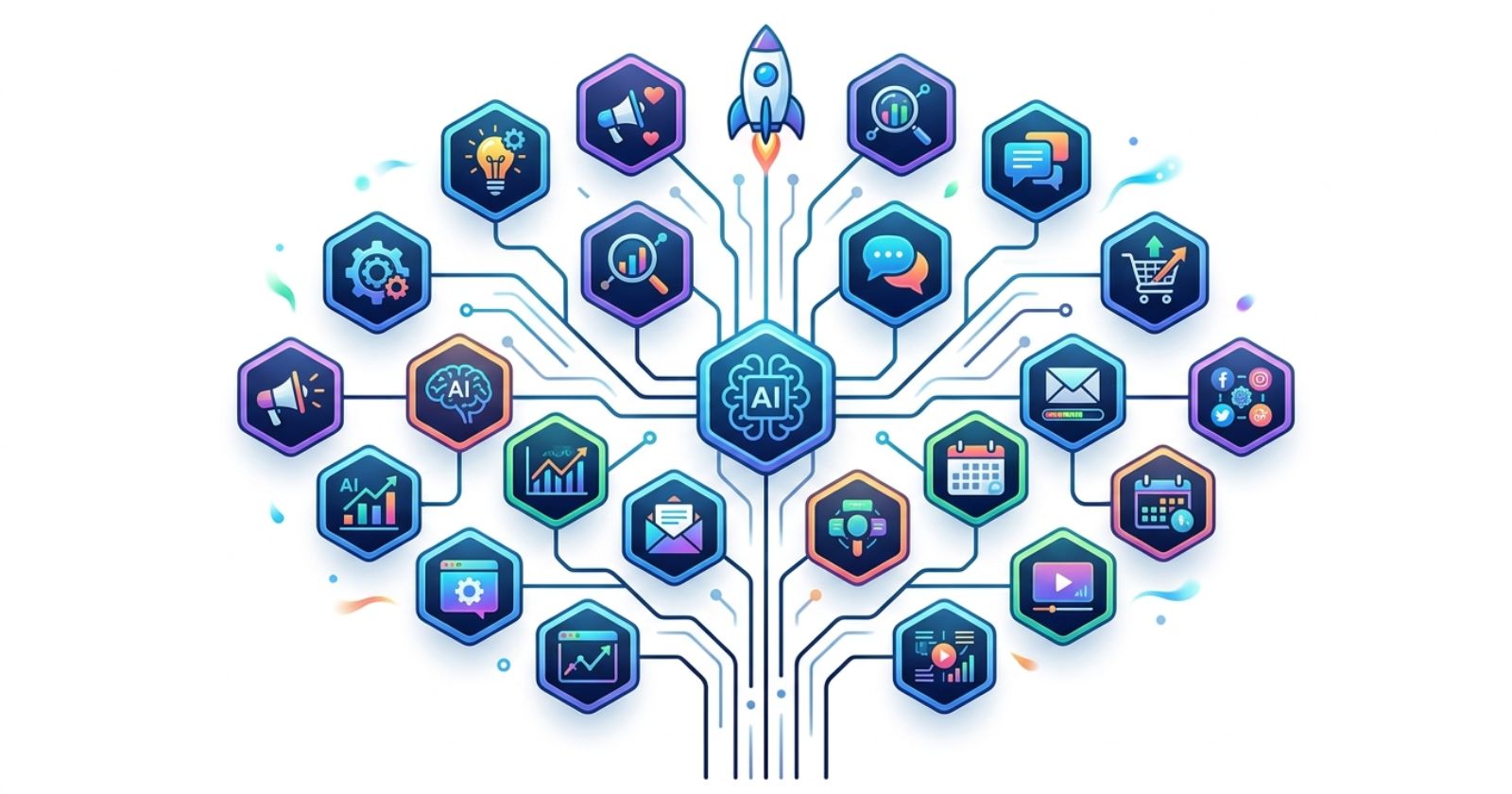
Imagine a world where artificial intelligence does not operate in isolation but forms dynamic teams, much like human specialists pooling expertise to conquer daunting challenges. Multi-agent AI embodies this vision, where multiple intelligent entities interact, negotiate, and coordinate to deliver outcomes far beyond the reach of solitary systems.
Rooted in decades of research, this approach draws from fields like robotics and game theory, evolving rapidly with advances in large language models. Today, as businesses grapple with interconnected complexities, multi-agent systems emerge as a beacon of efficiency and adaptability.
These systems thrive on diversity among agents, each tailored with unique skills such as data analysis, prediction, or execution. In practice, one agent might scout patterns in vast datasets while another refines strategies based on real-time feedback, creating a symphony of computation that feels almost organic.
Experts note that such collaboration mirrors natural ecosystems, where ants forage collectively, or birds flock in unison, but amplified by silicon precision. This synergy not only accelerates decision-making but also fosters resilience, as the network redistributes tasks if one component falters.
The momentum behind multi-agent AI surges forward, fueled by a global market projected to exceed $15 billion by 2028, according to industry analysts. From startups experimenting with niche applications to tech giants embedding agents in cloud services, the technology permeates everyday tools.
Yet, its true power lies in accessibility, empowering even small teams to orchestrate sophisticated workflows without deep coding knowledge. As adoption grows, multi-agent AI stands poised to redefine productivity, inviting a future where human ingenuity pairs effortlessly with machine collaboration.
Unpacking Multi-Agent AI Fundamentals
Core Building Blocks of Agent Networks
At its heart, multi-agent AI consists of autonomous entities called agents, each equipped to perceive environments, reason through options, and act decisively. These agents operate within a shared space, exchanging messages via protocols that ensure clarity and security.
Key components include perception modules for gathering data, decision engines powered by algorithms like reinforcement learning, and communication layers that handle negotiation or consensus-building.
Consider a logistics scenario: one agent monitors traffic patterns, another optimizes routes, and a third adjusts for weather disruptions. This modular design allows for plug-and-play scalability, where new agents integrate seamlessly to address emerging needs. Research highlights that such structures reduce latency by up to 40 percent in distributed computing tasks, showcasing their edge over centralized models.
How Multi-Agent Differs from Solo AI Efforts
Single-agent AI excels at focused tasks, like chatbots handling queries, but stumbles on multifaceted problems requiring diverse perspectives. Multi-agent setups, by contrast, distribute cognitive loads, enabling emergent behaviors where the whole exceeds the sum of parts.
For instance, in simulations, agent teams solve optimization puzzles 25 percent faster than lone counterparts, per studies from computational labs.
This distinction shines in dynamic settings, such as stock trading, where one agent analyzes sentiment while peers execute trades, adapting to market volatility in real time. The collaborative ethos introduces fault tolerance, too; if an agent errs, others compensate, maintaining system integrity. Such robustness stems from decentralized control, avoiding single points of failure that plague monolithic designs.
Why Multi-Agent AI Delivers Superior Results
Efficiency Gains Through Specialization
Specialization forms the cornerstone of multi-agent prowess, with each agent honing expertise in niches like natural language processing or image recognition. This division of labor slashes processing times, as parallel operations handle subtasks concurrently. Businesses report up to 60 percent workflow improvements after deployment, particularly in data-heavy fields.
Moreover, agents learn from interactions, refining models through shared experiences. This collective intelligence evolves systems over time, turning static tools into adaptive allies. In creative industries, for example, one agent generates ideas while another critiques feasibility, yielding innovative outputs with minimal human oversight.
Scalability and Adaptability in Action
Scalability defines multi-agent AI’s appeal for growing enterprises, as adding agents requires minimal reconfiguration. Cloud-based frameworks facilitate this expansion, supporting thousands of interactions without performance dips. Adaptability follows suit, with agents reconfiguring roles based on context, such as shifting from routine monitoring to crisis response during supply disruptions.
Key fact: In a 2025 survey of executives, 88 percent planned budget increases for multi-agent tech due to its proven ROI in scaling operations. This flexibility proves invaluable in volatile markets, where rapid pivots determine survival.
Navigating Hurdles in Multi-Agent Deployment
Coordination Complexities and Communication Gaps
While promising, multi-agent systems grapple with coordination, as misaligned goals can lead to conflicts or inefficiencies. Ensuring seamless communication demands robust protocols, yet latency in message passing remains a pitfall, especially in high-stakes environments like autonomous driving.
Studies reveal that up to 30 percent of initial implementations face integration snags, underscoring the need for standardized interfaces. Developers counter this through hierarchical structures, where supervisor agents oversee subordinates, streamlining directives.
Ethical Considerations and Security Risks
Ethics loom large, with concerns over bias amplification when agents echo flawed inputs across the network. Security vulnerabilities arise, too, as interconnected agents expand attack surfaces, potentially exposing sensitive data. Mitigation strategies include encrypted channels and regular audits, yet the decentralized nature complicates oversight.
A notable finding: Only 45 percent of firms in recent polls felt fully prepared for multi-agent ethical challenges, highlighting a gap in governance frameworks. Balancing innovation with responsibility thus becomes paramount.
Transforming Industries with Multi-Agent Magic
Revolutionizing Healthcare Delivery
In healthcare, multi-agent AI orchestrates patient care, with one agent diagnosing via scans, another prescribing treatments, and a third monitoring outcomes. This teamwork accelerates diagnostics, reducing wait times by 35 percent in pilot programs.
Agents also simulate drug trials, predicting interactions across virtual populations for faster, safer innovations. During outbreaks, they model spread patterns, aiding resource allocation and saving lives through proactive alerts.
Streamlining Finance and Risk Management
Financial sectors leverage agents for fraud detection, where specialized units scan transactions while others profile behaviors, flagging anomalies with 95 percent accuracy. Portfolio optimization benefits similarly, as agents balance risks in real time amid market fluxes.
In compliance, multi-agent networks sift through regulations, ensuring adherence while minimizing errors. This precision not only cuts costs but fortifies trust in automated trading ecosystems.
Enhancing Manufacturing and Logistics Flows
Manufacturing sees agents coordinating robotic arms on assembly lines, adjusting for defects on the fly to boost yield rates by 20 percent. Logistics applications route fleets dynamically, factoring in fuel efficiency and delivery deadlines for greener, timelier operations.
Supply chain resilience improves as agents forecast disruptions, rerouting goods preemptively. These applications underscore multi-agent AI’s role in fostering sustainable, agile production.
Emerging Trends Shaping Multi-Agent AI Horizons
Integration with Large Language Models
Large language models supercharge multi-agent systems, enabling nuanced dialogue and reasoning. In 2025, hybrid architectures blend LLMs with agent swarms for tasks like personalized education, where tutors adapt curricula collaboratively.
This fusion enhances contextual awareness, allowing agents to anticipate needs in conversational flows. Expect widespread adoption in customer service, where agent teams resolve queries holistically.
Rise of Agentic Ecosystems in Enterprises
Enterprises embrace multi-agent ecosystems for end-to-end automation, from procurement to analytics. Trends point to low-code platforms democratizing access, empowering non-experts to build custom networks.
Key insight: By mid-2025, 70 percent of Fortune 500 firms will deploy agentic workflows, per forecasts, signaling a shift toward autonomous operations.
Spotlight on Top Multi-Agent AI Trailblazers
The landscape brims with innovators pushing multi-agent boundaries. These firms pioneer frameworks that blend autonomy with orchestration, fueling breakthroughs across domains. Below, a curated selection highlights their contributions, products, and impacts.
| Company | Key Product/Framework | Primary Focus Area | Notable Achievement |
|---|---|---|---|
| OpenAI | Swarm | Collaborative agent orchestration | Enabled scalable task delegation in research |
| Microsoft | Copilot Agents | Enterprise workflow automation | Integrated into Azure for 50M+ users |
| Gemini Agents | Multimodal interaction | Powered real-time translation teams | |
| Anthropic | Claude Multi-Agent | Ethical AI collaboration | Reduced bias in decision simulations by 40% |
| LangChain | LangGraph | Modular agent building | Supported 100K+ open-source projects |
| AWS | Bedrock Agents | Cloud-based deployment | Handled petabyte-scale logistics |
| NVIDIA | Eureka Agents | Simulation and training | Accelerated robotics development 10x |
| Adept AI | ACT-1 Framework | Action-oriented agents | Automated complex UI interactions |
| Cognition Labs | Devin | Software engineering agents | Built full apps autonomously |
| Salesforce | Agentforce | CRM integration | Boosted sales efficiency by 30% in trials |
This table illustrates diverse strengths, from cloud scalability to ethical safeguards. OpenAI’s Swarm, for instance, facilitates lightweight agent swarms for rapid prototyping, while NVIDIA’s tools excel in hardware-accelerated simulations.
Microsoft’s Copilot extends agents into daily tools, democratizing access for developers worldwide. Anthropic emphasizes safety, embedding constitutional AI principles to guide interactions.
LangChain’s ecosystem empowers builders with reusable components, fostering innovation in custom solutions. AWS Bedrock streamlines enterprise rollouts, integrating with existing infrastructures seamlessly.
Adept focuses on practical actions, bridging digital and physical realms. Cognition’s Devin marks a milestone in code generation, hinting at future developer augmentation. Salesforce tailors agents for business intelligence, enhancing customer relationships through predictive insights.
These leaders collectively invest billions in R&D, with OpenAI alone allocating $7 billion in 2025 for agent advancements. Their efforts not only advance technology but also set benchmarks for interoperability, ensuring multi-agent AI evolves as an inclusive force.
Embracing the Collaborative Frontier
As multi-agent AI matures, its potential to weave intelligence into the fabric of society becomes ever clearer, promising an era where technology anticipates needs with uncanny foresight.
From quiet efficiencies in boardrooms to bold explorations in laboratories, these agent networks quietly redefine possibilities, turning abstract challenges into tangible triumphs. Leaders in the field continue to refine architectures, addressing pain points like interoperability while amplifying strengths in adaptability and scale.
Stakeholders across sectors watch closely, recognizing that early adopters will not just survive but thrive amid accelerating change. The journey forward invites thoughtful integration, balancing innovation’s spark with safeguards for equity and transparency. Ultimately, multi-agent AI heralds a harmonious blend of machine precision and human aspiration, charting courses toward smarter, more connected worlds that benefit all.
Frequently Asked Questions
What Exactly Defines a Multi-Agent AI System?
A multi-agent AI system involves multiple autonomous agents interacting in a shared environment to achieve goals. Each agent handles specific roles, collaborating through communication protocols for complex problem-solving.
How Do Multi-Agent Systems Improve Over Single Agents?
They distribute tasks for parallel processing, enhance adaptability via specialization, and build resilience against failures, often yielding 25-60 percent efficiency gains in benchmarks.
What Are Common Applications in Everyday Business?
Applications span fraud detection in finance, patient monitoring in healthcare, and inventory optimization in retail, automating workflows while integrating human oversight.
Can Multi-Agent AI Handle Real-Time Decisions?
Yes, with low-latency protocols and edge computing, agents process dynamic data streams, as seen in autonomous vehicle coordination or stock trading.
What Challenges Arise in Implementing These Systems?
Key hurdles include coordination conflicts, high computational costs, and ethical risks like bias propagation, requiring robust governance and testing.
How Does Integration with LLMs Enhance Multi-Agent Capabilities?
LLMs provide advanced reasoning and natural language interfaces, enabling agents to negotiate fluidly and adapt contexts, boosting overall intelligence.
Are There Open-Source Tools for Building Multi-Agent Setups?
Frameworks like LangChain and AutoGen offer accessible starting points, supporting prototyping without heavy investment.
What Role Does Security Play in Multi-Agent Networks?
Security involves encrypted communications and access controls to mitigate breaches, with regular audits essential for distributed architectures.
How Will Multi-Agent AI Evolve by 2030?
Projections indicate hybrid human-agent teams dominating, with quantum enhancements for ultra-fast simulations and broader ethical standards.
Which Industries Stand to Benefit Most from This Tech?
Healthcare, finance, and logistics lead, but manufacturing and education follow closely, driven by needs for precision and scalability.