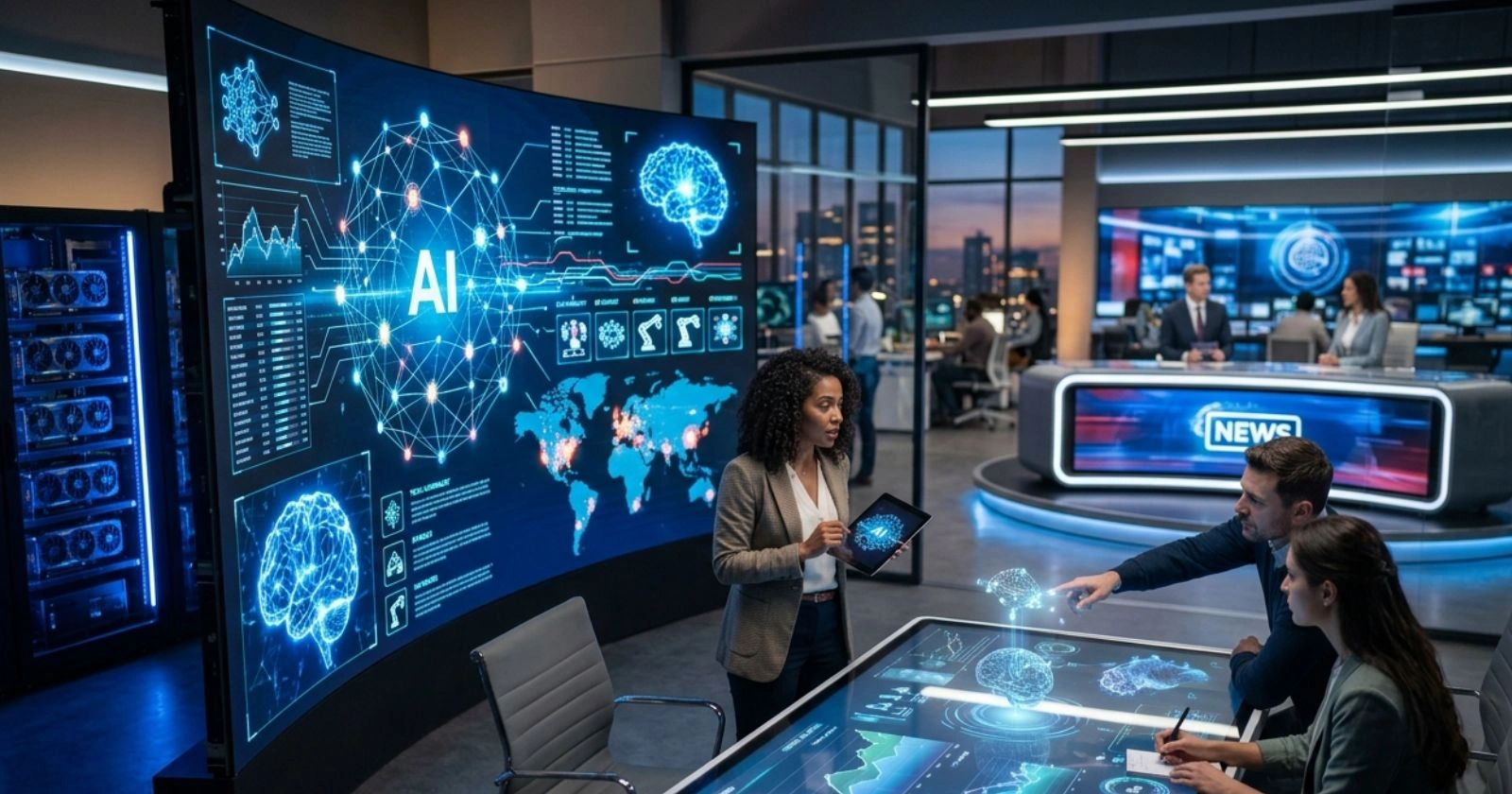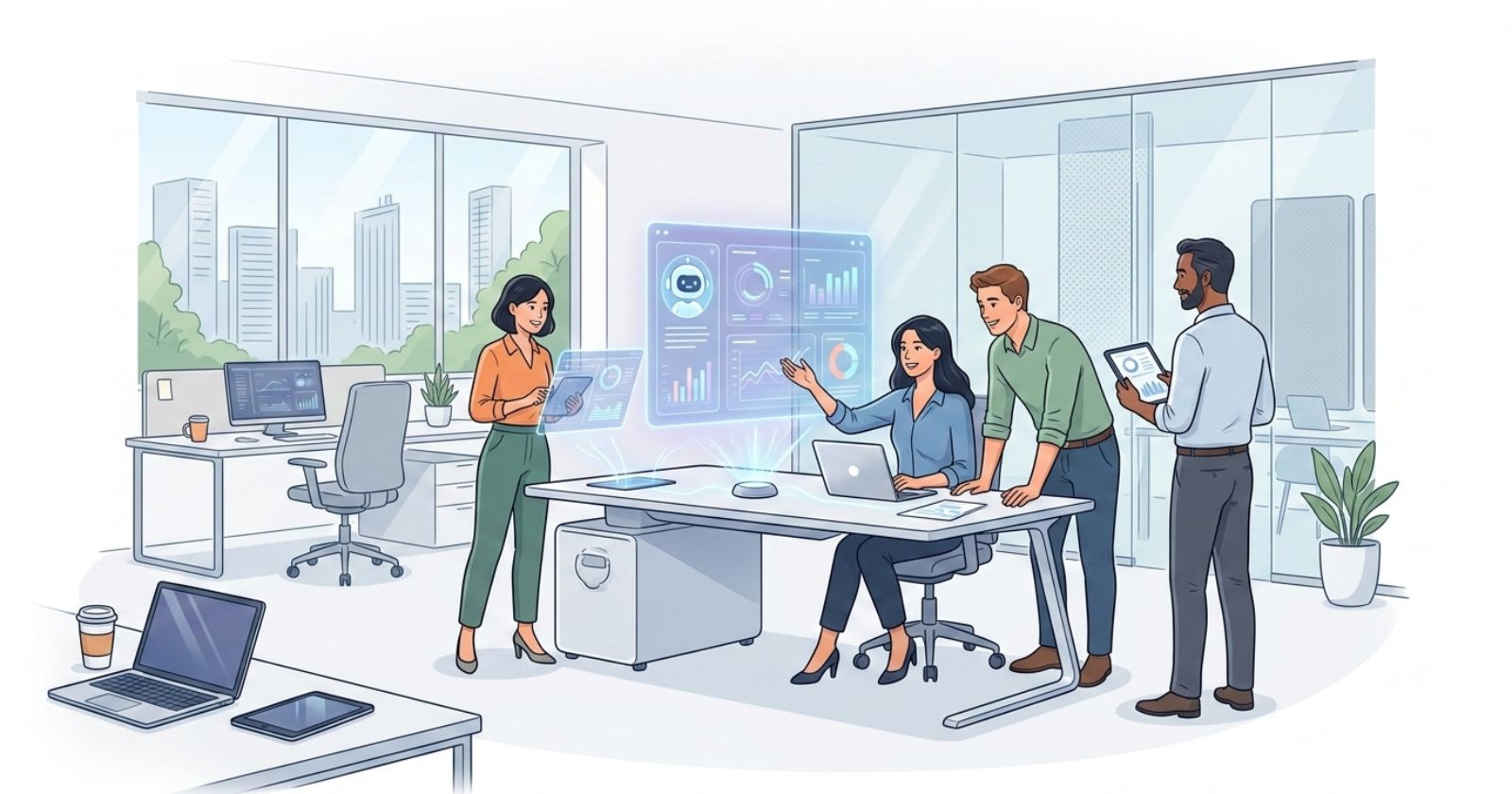
The rise of AI agents marks a profound shift in modern workplaces, where autonomous systems now handle complex, multistep tasks with minimal oversight. These intelligent tools go beyond simple chat responses to plan, reason, adapt to new information, and execute workflows using tools like databases, calendars, and internal systems.
In offices across the United States and Canada, and increasingly worldwide, companies integrate these agents to streamline operations, boost efficiency, and redirect human effort toward strategic priorities.
This evolution stems from rapid advancements in generative AI and agentic frameworks. Early adopters, such as cloud data platforms, report engineers spending hours daily with multiple agents that automate routine monitoring, data gathering, and even coding under supervision.
As a result, professionals focus on creative problem-solving and decision-making rather than repetitive groundwork. Organizations experiment with agent-to-agent collaboration, where one system generates output and another reviews or refines it before human approval.
Yet this transformation brings both promise and uncertainty. While productivity surges, questions arise about job structures, trust in technology, and the balance between automation and human judgment.
Recent analyses show white-collar sectors facing changes, with some roles diminishing and others emerging to oversee these digital workers. The workplace hierarchy flattens in places, as agents assume coordination once reserved for middle layers.
AI agents represent a new category of digital workforce members that actively contribute to business outcomes. Unlike traditional chatbots limited to one-turn interactions, these systems maintain context over time, pursue goals autonomously, and interact with external resources. For instance, in engineering teams, agents scan systems for issues, compile analyses, and suggest fixes, freeing humans for innovation.
Adoption accelerates quickly. Forecasts indicate that by the end of 2026, around 40 percent of enterprise applications will incorporate task-specific AI agents, a dramatic increase from minimal levels in prior years.
Surveys reveal broad experimentation, with many organizations scaling multi-agent systems for end-to-end processes like supply chain management or software development. This shift redefines collaboration, as humans delegate to agents without social friction, reducing burnout while raising needs for oversight.
How AI Agents Reshape Daily Workflows
In practice, AI agents integrate into routine operations across industries. Engineering departments use them for incident response, where agents diagnose outages and propose resolutions based on historical data. Marketing teams employ agents to analyze trends, draft content, and optimize campaigns. Finance and administrative functions benefit from agents that process reports, track performance, and flag anomalies.
Agent-to-agent workflows amplify scale. One agent might research market data, another synthesizes insights, and a third generates recommendations, all coordinated seamlessly. This orchestration enables faster execution, as companies no longer rely solely on human chains of communication.
The Flattening of Organizational Structures
Traditional hierarchies face pressure as AI agents absorb coordination and supervision tasks. Middle management, historically responsible for translating strategy into assignments and monitoring progress, sees portions of that role automated. Tools now deliver daily tasks, feedback, and context directly to employees, bypassing some layers.
Reports suggest that in larger organizations, AI-driven efficiency contributes to leaner structures. Entry-level positions in analytical or administrative fields experience impacts first, with graduates facing higher competition. Middle tiers encounter disruption as agents handle operational oversight, prompting a reevaluation of reporting lines.
This flattening does not eliminate management entirely. Instead, it elevates roles toward strategic guidance, ethical oversight, and agent orchestration. New positions emerge, such as agent managers who ensure systems align with goals, monitor performance, and intervene when needed.
Key Statistics on AI Agent Impact
| 15% of day-to-day decisions will be autonomous by 2028 | Statistic | Source Insight |
|---|---|---|
| Enterprise Application Integration | 40% of enterprise apps to include task-specific AI agents by end of 2026 | Gartner forecast, up from <5% in 2025 |
| Organizational Adoption | 35-62% experimenting or scaling agents in functions | Various surveys (PwC, McKinsey) |
| Multi-Agent Growth | Usage grew 327% in recent periods | Databricks enterprise data |
| Workforce Effects | Potential for 6-7% US job displacement, higher in certain fields | Goldman Sachs estimate |
| Decision Autonomy | 15% of day-to-day decisions autonomous by 2028 | Gartner projection from near 0% in 2024 |
These figures illustrate accelerating change while highlighting uneven distribution across roles and sectors.
Challenges in Building Trust and Adoption
Psychological barriers hinder full integration. Employees may resist delegating to agents if they perceive threats to competence or autonomy. Research highlights that trust determines success; without it, even capable systems underperform due to reluctance or sabotage.
Companies address this by framing AI as an enhancer rather than a replacer. Some adopt policies like reduced workweeks to share productivity gains, fostering cooperation. Others prioritize human-in-the-loop designs, where agents propose actions for approval.
Communication habits evolve, too. Workers delegate more freely to agents, avoiding interpersonal costs. However, overreliance risks eroding team connections or oversight gaps.
The Human Element in an AI-Driven Workplace
Humans retain irreplaceable value in areas requiring empathy, ethical judgment, and nuanced creativity. Roles demanding interpersonal trust, such as counseling or client relations, maintain strong preferences for human involvement.
Successful organizations balance automation with human strengths. They reskill workforces for strategic thinking and agent supervision. Emerging careers focus on building, governing, and optimizing AI systems.
Regulation lags behind innovation. Concerns include bias in decisions, cybersecurity vulnerabilities, and accountability for agent actions. Lawsuits challenge AI-influenced outcomes in hiring or claims processing, underscoring needs for clear governance.
Key Conclusion and Analysis
The integration of AI agents signals a fundamental redefinition of work, where technology assumes operational burdens and humans reclaim creative and relational dimensions.
Organizations that prioritize thoughtful adoption, invest in reskilling, and maintain human-centered values stand to gain lasting advantages. Those that rush toward cost-cutting without addressing trust or equity risk backlash and missed potential.
As this era unfolds, the most resilient workplaces blend technological power with human insight, ensuring progress benefits everyone involved. The path forward demands intentional design, ongoing dialogue, and a commitment to ethical evolution in the face of rapid change.
FAQs
What distinguishes AI agents from traditional chatbots?
AI agents plan, reason through multistep processes, adapt to changes, and execute actions using tools, while chatbots primarily respond to single prompts without ongoing autonomy.
How do companies currently use AI agents in engineering teams?
Agents handle monitoring, data compilation, incident response, and coding support, allowing engineers to prioritize complex decisions and innovation.
Can AI agents manage other agents?
Yes, agent-to-agent workflows enable one system to generate output, another to review or refine it, scaling operations with limited human input.
What impact do AI agents have on middle management roles?
They automate coordination, task assignment, and performance tracking, potentially reducing layers while shifting focus to strategic and ethical oversight.
Are jobs being lost due to AI agents right now?
Some layoffs cite AI efficiency, particularly in entry-level and administrative areas, though effects remain anticipatory in many cases, with new roles emerging.
How important is trust in adopting AI agents?
Critical, as lack of trust leads to underuse or resistance; building confidence through transparency and human oversight enhances outcomes.
What new skills do workers need in AI-integrated workplaces?
Strategic thinking, agent management, ethical decision-making, and collaboration with autonomous systems become essential.
Do AI agents pose cybersecurity risks?
Yes, autonomous actions increase vulnerabilities; robust governance and monitoring mitigate threats like unauthorized access or data mishandling.
How do multi-agent systems improve business efficiency?
They orchestrate complex workflows end-to-end, enabling faster scaling, reduced errors, and better resource allocation across functions.
What does the future hold for human-AI collaboration?
Hybrid models prevail, with humans directing strategy and agents handling execution, creating more productive, innovative environments when balanced properly.