Physical AI stands at the forefront of technological evolution, bridging the gap between digital intelligence and tangible reality. Systems once confined to screens now perceive surroundings through advanced sensors, process complex information in real time, and execute precise actions in dynamic settings. This convergence creates machines capable of independent operation amid physical laws, safety demands, and unpredictable conditions. Recent demonstrations at major events and deployments in production environments highlight acceleration toward widespread integration.
Progress stems from converging advancements in multimodal sensing, powerful edge computing, and foundational models trained on vast datasets that include physical interactions. Machines equipped with these technologies handle tasks requiring spatial awareness, dexterity, and adaptability far beyond traditional automation.
Industries facing labor constraints, rising complexity, and demands for precision find particular value here. The transition marks a pivotal moment where intelligence moves beyond information processing to reshape physical operations directly.
Economic implications appear substantial. Projections indicate robust expansion, with core markets potentially reaching tens of billions by the end of the decade and broader ecosystems contributing hundreds of billions through related applications in mobility and infrastructure. Early adopters gain advantages in efficiency, resilience, and innovation as these systems scale from controlled pilots to everyday use.
What Defines Physical AI
Physical AI encompasses artificial intelligence embedded in devices that interact with the physical environment. These systems integrate perception through cameras, lidar, tactile sensors, and other inputs to build accurate representations of surroundings. Reasoning components enable planning and decision-making under uncertainty, while actuation mechanisms translate choices into movements or manipulations.
Distinctions emerge from prior AI forms. Generative models create digital content, agentic systems coordinate virtual tasks, yet Physical AI demands embodiment. Constraints like physics, energy limits, latency, and safety shape design. Success depends on the seamless fusion of these elements, allowing reliable performance in real conditions.
Core building blocks include multimodal sensor fusion for robust environmental understanding, advanced planning algorithms for action sequencing, and precise control systems for execution. Ongoing refinements address embodiment challenges, such as handling unstructured settings or diverse object interactions, where human adaptability still leads, but machines excel in repetition and precision.
Rapid Advances in Core Technologies
Perception capabilities improve through the integration of diverse data streams. Vision language action models combine visual inputs with language understanding to interpret scenes and follow instructions. Additions like tactile feedback enhance manipulation, enabling finer control in tasks involving contact or force.
Decision-making evolves with models that reason over time and space. Simulation platforms generate synthetic data at scale, overcoming real-world data scarcity. Reinforcement learning in virtual environments accelerates training, preparing systems for physical deployment with reduced risk.
Actuation benefits from energy-efficient designs and responsive hardware. Edge semiconductors handle compute-intensive tasks locally, minimizing delays critical for safety. These developments collectively narrow gaps in adaptability, pushing systems toward greater autonomy.
Key Industries Driving Adoption
Adoption concentrates where economic returns justify investment and environments allow controlled progression.
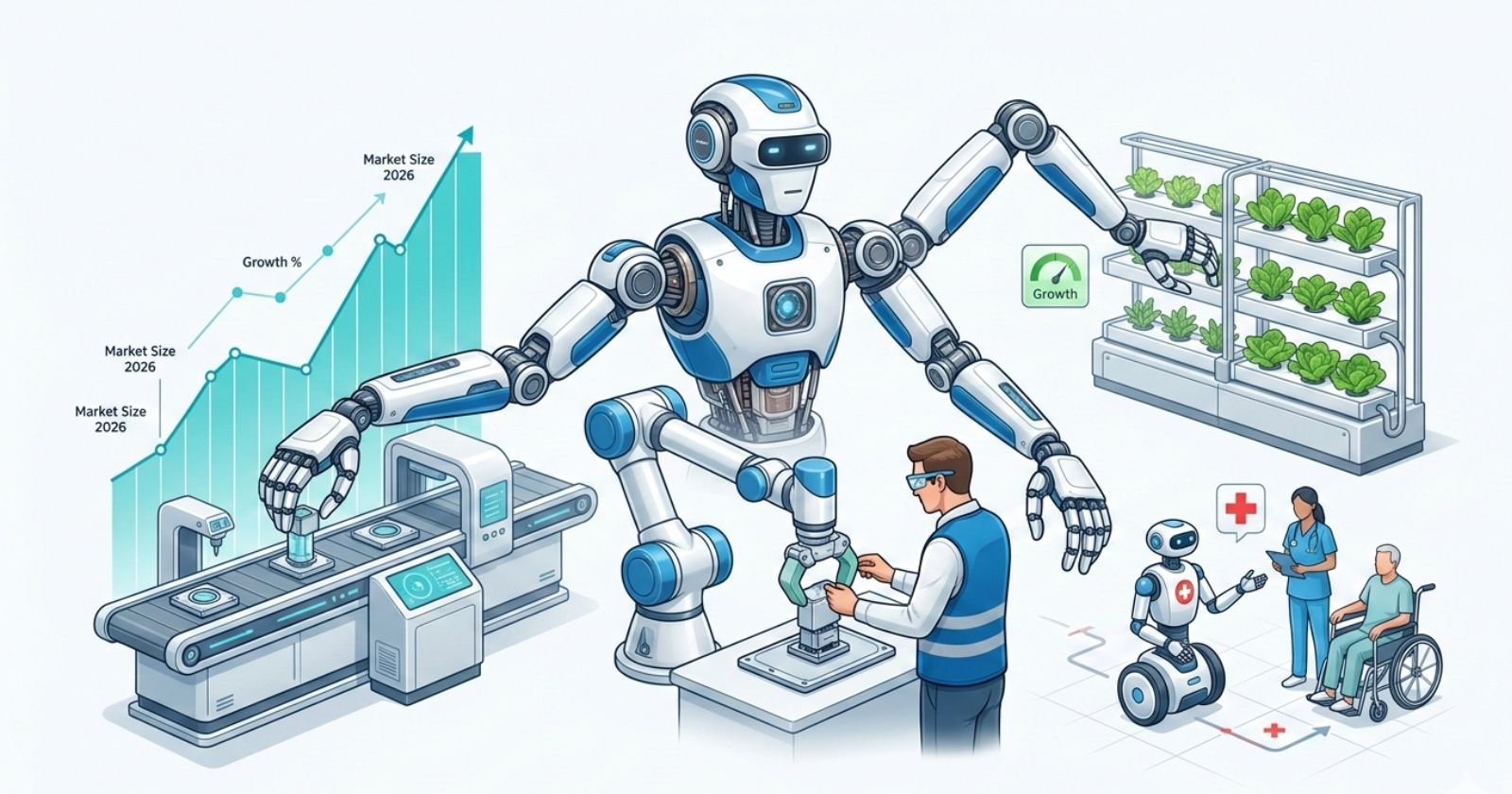
Autonomous driving leads with sophisticated perception and planning for navigation in traffic. Vehicles process sensor data to make split-second decisions, enhancing safety and efficiency in mobility.
Industrial automation benefits from robots performing repetitive or hazardous tasks. Smart infrastructure uses predictive monitoring to maintain equipment, reducing downtime in factories and utilities.
Humanoids and service robots assist in structured assistance roles. Applications include warehouse handling, elderly care support, and facility maintenance, where interaction with people requires contextual awareness.
Aerospace and defense leverage drones and autonomous systems for surveillance, logistics, and operations in challenging terrains. Precision and reliability prove essential here.
Entertainment incorporates interactive elements, while healthcare explores monitoring and assistive devices, though always under professional oversight.
Maturity Levels and Realistic Expectations
Many capabilities advance quickly, yet full maturity varies. Systems surpass humans in precision, speed for constrained tasks, and endurance. Unstructured environments, complex manipulation, and nuanced human collaboration remain challenging.
Early commercial successes focus on semi-structured settings like logistics sorting or manufacturing assembly. Broader deployment accelerates as reliability improves and costs decline. Transition from pilots to scaled operations occurs over the next few years, driven by data flywheels and iterative learning.
Value shifts toward software layers, including foundational models and simulation tools, alongside specialized hardware. Companies strategically position across the stack to secure advantages.
Major Value Pools and Ecosystem Dynamics
Value concentrates in high-impact areas. Automotive and mobility capture significant shares through autonomous features. Industrial sectors follow with automation gains in warehousing and production.
Digital infrastructure relies on high-performance computing for training and inference. Foundational models serve as intelligent cores for perception and action. Simulation platforms enable safe virtual testing, cutting development time.
Opportunities span chip suppliers, software providers, integrators, and end users redesigning workflows. Success requires navigating competitive landscapes and addressing interoperability through standards.
Strategic Arenas for Competitive Edge
Seven arenas shape the ecosystem.
- Foundational world models simulate physical dynamics across modalities, supporting prediction and planning.
- Domain-specific models tailor performance to sectors like manufacturing or healthcare, optimizing efficiency.
- Edge semiconductors deliver on device compute for low-latency control.
- Precision sensors and actuators ensure reliable interaction.
- Standards promote modularity and reduce vendor lock-in.
- OEMs and integrators handle deployment and services.
- Sovereignty considerations influence regional capabilities in critical technologies.
Real World Examples and Augmentation Focus
Implementations demonstrate practical value. In agriculture, sensors track environmental data to optimize operations. Manufacturing uses predictive analytics for equipment health. Energy sectors synthesize inputs for proactive management.
Emphasis falls on augmentation rather than replacement. Systems equip smaller teams to oversee complex environments, providing insights that enhance decision-making. This approach addresses shortages while preserving human oversight in critical areas.
Challenges on the Path Forward
Safety remains paramount, requiring rigorous validation. Ethical deployment considers workforce impacts and equitable access. Data privacy in sensor-rich settings demands careful handling. Energy consumption for compute-intensive tasks prompts efficiency innovations.
Overcoming these builds trust and accelerates acceptance.
The Transformative Horizon Ahead
Physical AI fundamentally alters interactions with the physical economy. Machines evolve into adaptive partners, handling physical work with increasing sophistication. Control over perception, reasoning, and action in real settings confers lasting advantages.
The window for strategic positioning narrows as standards form and leaders emerge. Decisions on partnerships, data approaches, and capabilities shape outcomes in this fast-moving domain.
Organizations that integrate these technologies thoughtfully stand to enhance productivity, resilience, and innovation. The shift extends intelligence into motion, redefining possibilities across sectors and daily life.
As adoption matures, benefits compound, creating ecosystems where human ingenuity combines with machine precision for unprecedented progress. The era demands proactive engagement to harness potential while navigating the complexities inherent in blending intelligence with the physical world.